
5 Steps to Get ChatGPT Recommending Your Financial Advice Business
Quick Summary: The way people find, research and vet financial advisers is shifting. Instead of just Googling and scrolling through results, Australians are increasingly asking AI chatbots like ChatGPT to do the due diligence for them. Getting recommended comes down to building genuine authority across trusted platforms, maintaining consistent business information everywhere you appear online, and creating original content that demonstrates your expertise. The advisers who embrace this shift now are positioning themselves for a significant competitive advantage.
A shift is happening in how Australians find financial advisers
Right now, one in four Australians is asking ChatGPT for recommendations instead of typing queries into Google. And Australia has become the global leader in AI search adoption.
People are increasingly turning to ChatGPT, Google's AI, and other AI assistants to ask questions like "Who's a good financial adviser near me?" or "Can you recommend someone who specialises in retirement planning?" or “Tell me about <adviser name>”.
This represents a massive opportunity. Research shows that leads from ChatGPT recommendations convert at 15 times the rate of traditional Google search. When an AI recommends you by name, it carries serious weight with potential clients.
The great news is that the principles for getting AI to recommend you align perfectly with what builds a genuinely strong advisory practice: being authentic, demonstrating expertise, and making it easy for people to trust you.

Understanding the Three Types of AI Search
Not all AI search experiences work the same way.

Google AI Overview
Google's AI Overview appears at the top of search results, summarising information from multiple sources. It's designed to give quick answers while still driving traffic to websites. When someone searches "best financial adviser Brisbane", the AI Overview pulls information from the top Google search results and Google Business pages.
Google AI Mode
Google AI Mode allows for conversational, multi-turn queries where users can ask follow-up questions. Someone might start with "financial advisers who specialise in small business owners" and then follow up with "which ones are in Melbourne and have good reviews." The AI pulls from Google's entire index to provide comprehensive answers.
AI Chatbots (ChatGPT, Perplexity, Claude)
AI Chatbots consider the user's specific story before it responds. When someone asks ChatGPT "Can you recommend a financial adviser who helps teachers plan for retirement?" the AI draws on real-time web sources to provide specific, contextualised recommendations.

Where does Chatgpt get its facts?
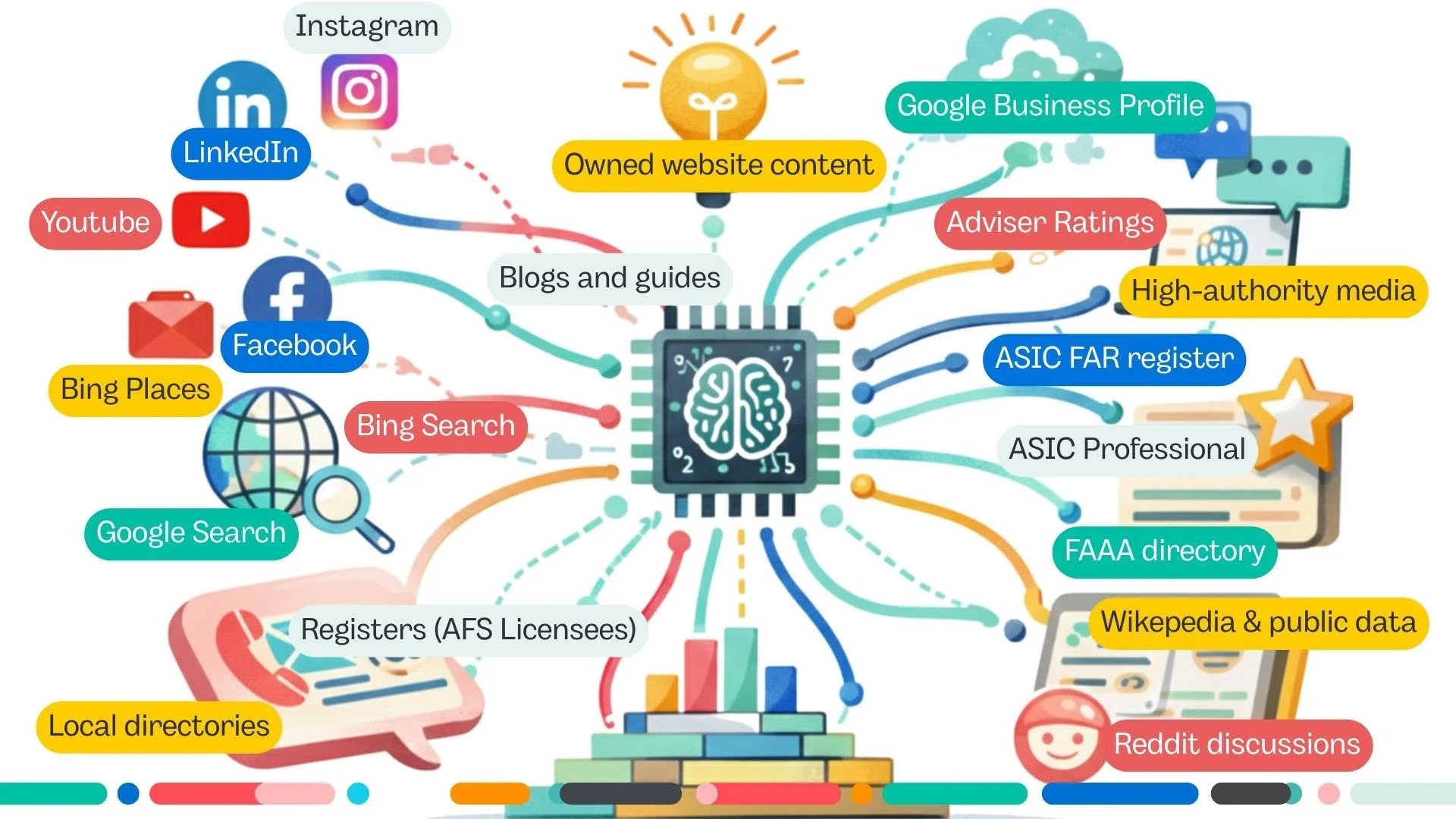
Think of AI as a Digital Private Investigator. They're scouring the web at lightning speed, hunting for 'clues' of your credibility.
They aren't just reading your 'About Us' page and taking your word for it. They are casting a massive net.
They’re checking the ASIC Professional Register, reading your Google and Adviser Ratings Reviews, and looking for third-party validation in community forums like reddit and media mentions.
They're looking for evidence and proof that you are a trusted, living breathing professional in the real world.
What AI Looks For When Making Recommendations
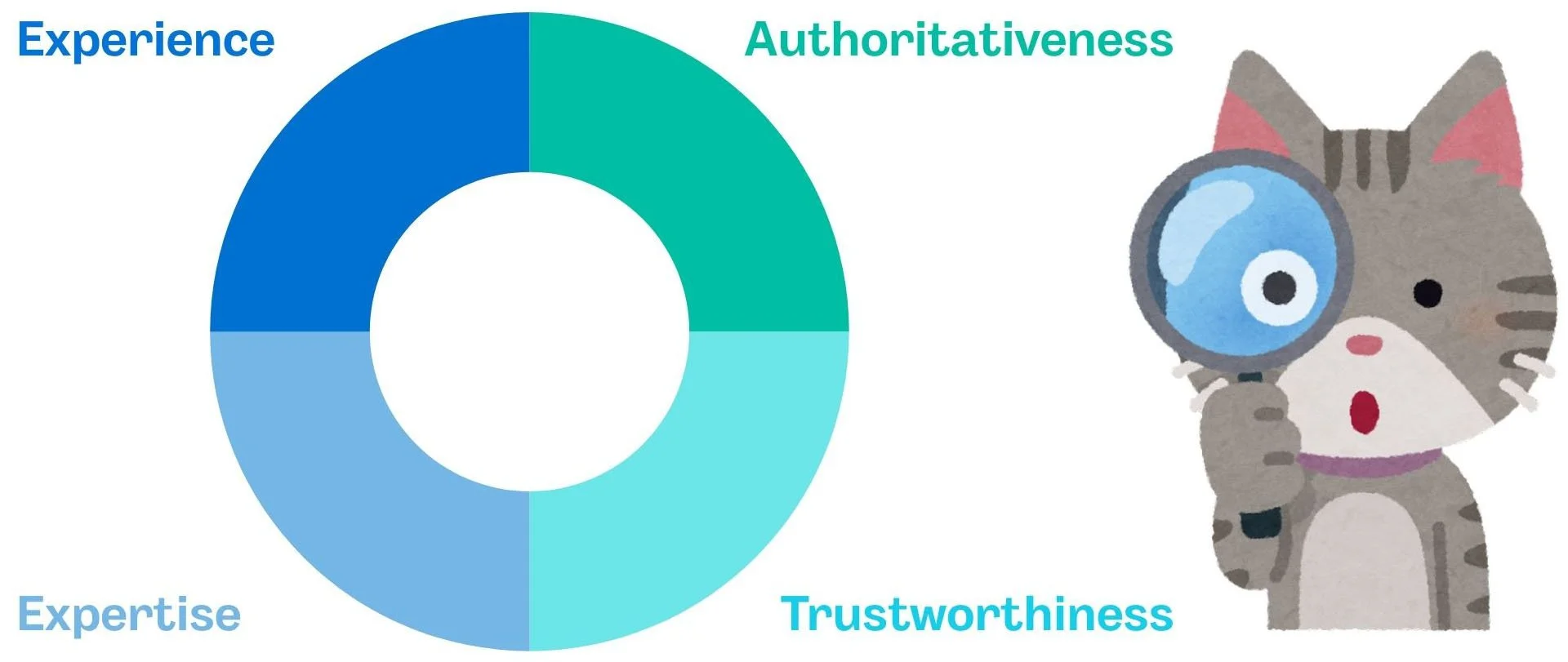
AI systems use sophisticated frameworks to determine who deserves a recommendation. Google's E-E-A-T framework (Experience, Expertise, Authoritativeness, Trustworthiness) has become the gold standard. This framework rewards advisers who demonstrate genuine knowledge and build real credibility.
Experience: Have you actually worked with clients in the areas you claim expertise. AI looks for evidence of real-world application through case studies, client stories and specific examples.
Expertise: Do your qualifications and content demonstrate deep knowledge. Your CFP, your specialised training, your years in practice all matter.
Authoritativeness: Do other credible sources reference you. Being quoted in publications, listed on professional directories, and mentioned by industry bodies all build authority.
Trustworthiness: Is your information accurate and your business legitimate? Consistent details across platforms, genuine client reviews, and proper licensing all contribute.
Three Trust Signals That Make AI Recommend You
1. Cross-Platform Consistency
AI systems cross-reference your information across multiple sources. When your business name, address, phone number, and services match perfectly across your website, Google Business Profile, LinkedIn, Adviser Ratings, and professional directories, AI gains confidence in recommending you.
2. Original Insight and Informational Gain
AI actively seeks out unique perspectives it can learn from. Publishing original content that offers genuine insight positions you as a source worth recommending. Generic content that repeats what everyone else says or information that’s already widely available doesn’t carry weight. Your lived experience working with real clients gives you stories and insights that AI can't find anywhere else. That's your edge.
3. Third-Party Validation
AI trusts what others say about you more than what you say about yourself. It actively seeks out real-world proof that you're legitimate: reviews from actual clients, mentions in media, and recommendations in forums like Reddit.
Financial Advisers’ Five-Step Roadmap to AI Visibility
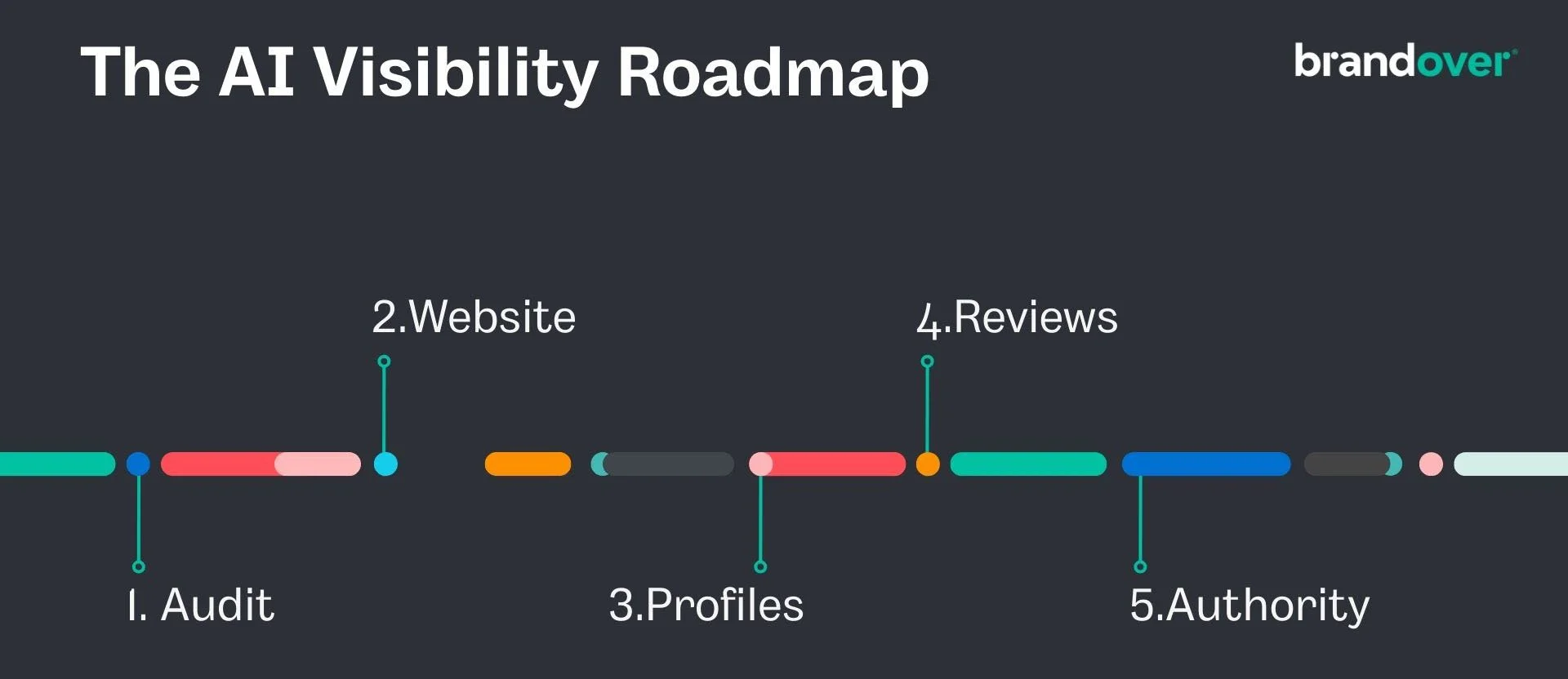
Step 1: AI Ask Audit
Start by discovering where you currently stand. Open ChatGPT, Perplexity, or Google AI and ask the questions your ideal clients would ask. Try variations like "Who's a good financial adviser in [your suburb]" or "Can you recommend a financial planner who specialises in [your niche]."
Note whether you appear, who your competitors are, and what sources the AI cites. This gives you a baseline and reveals opportunities.
Step 2: Tune Up Your Website
Your website is your digital source of truth. AI models check your site to verify facts and correct misinformation from other sources. Make sure it clearly communicates who you help, how you help them, and why you're the right choice.
Include your credentials prominently, share your story, and create content that demonstrates your expertise. Add FAQ sections on your About, Contact and Services pages addressing common questions your clients ask. These question-and-answer formats are exactly what AI systems look for when matching queries to answers.
Make sure your NAP (Name, Address, Phone) in your footer matches all other online listings exactly. And critically, ensure your site is indexed in Bing Webmaster Tools. ChatGPT uses Bing, not Google.

Step 3: Claim and Optimise Your Directory Profiles
AI cross-references your information across multiple platforms to verify you're a real, trustworthy entity. Priority platforms for Australian financial advisers include:
Google Business Profile (complete, accurate and claimed)
Bing Places for Business (ChatGPT uses Bing, not Google)
ASIC Financial Adviser Register (ensure information is current)
FAAA directory profile
Adviser Ratings profile
LinkedIn (personal and business pages)
Ensure every profile has consistent NAP information, a compelling description, and current photos.
Step 4: Build Your Review Engine
Reviews are social proof that AI systems trust. AI trusts what other people say about you more than what you say about yourself. Create a simple process for asking happy clients to share their experience on Google and Adviser Ratings.
The goal is consistency. Gathering a steady stream of reviews over time rather than a burst followed by silence.
Respond to every review, positive or negative. This demonstrates engagement and gives AI more content to work with.
Hot tip: Coach clients to mention specifics in their reviews. "They helped us with succession planning for our small business in Brisbane" helps AI match you to real search queries far better than generic "great service" reviews.
Step 5: Build Authority Beyond Your Website
Your authority is measured by the company you keep online. AI looks for mentions of you on other credible sites. Media features, podcast appearances, industry publications. This builds a web of authority AI can't ignore.
Expand your digital footprint through:
Seek opportunities to be quoted as an expert in industry media
Appear as a guest on relevant podcasts
Publish thought leadership content on your own site
Contribute articles to industry publications
Speak at events and conferences (and get listed on their websites)
Each mention on a credible external site reinforces your authority in AI systems.
The Opportunity For Financial Advice Busineses
AI search is creating new pathways for potential clients to find you. The advisers who embrace this shift and build genuine authority across trusted platforms are positioning themselves for significant advantages.
The best part is that everything that makes AI recommend you, being authentic, demonstrating real expertise, getting genuine client reviews, maintaining professional standards, is exactly what builds a thriving advisory practice anyway.
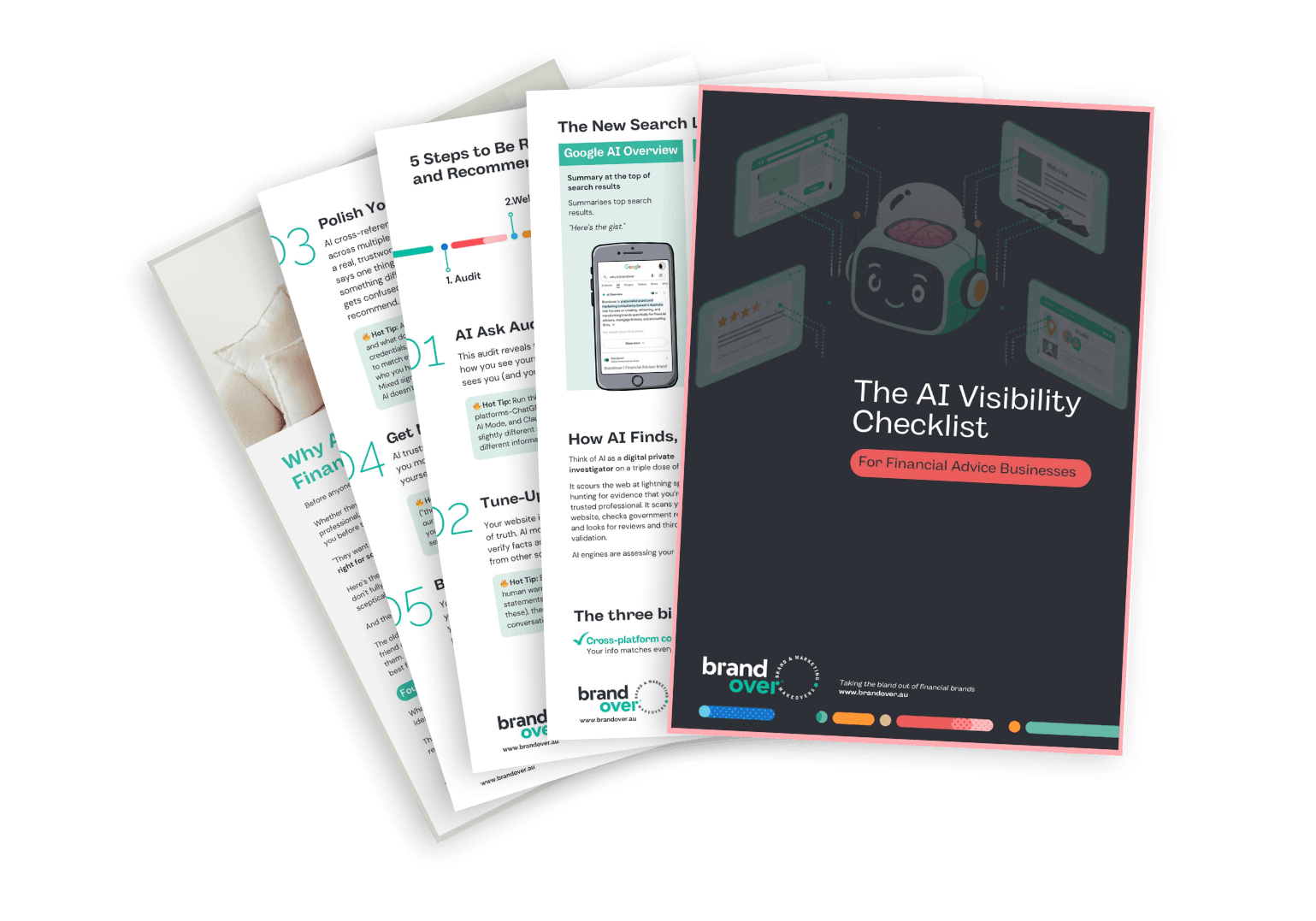
FREE DOWNLOAD
Make AI a referral source for your financial advice business.
Frequently Asked Questions
-
ChatGPT draws on its training data and increasingly uses real-time web searches to find credible sources. It looks for advisers mentioned on authoritative platforms, with strong review profiles, consistent business information, and original content that demonstrates expertise. Being listed on professional directories like the Financial Adviser Register and Adviser Ratings significantly increases your chances of being recommended.
-
ChatGPT's knowledge comes from publicly available web content including professional directories, review platforms, news articles, industry publications, and business websites. For Australian advisers, key sources include ASIC's Financial Adviser Register, Adviser Ratings, Google Business Profiles, and industry publications like Money Management and Financial Standard. Critically, ChatGPT uses Bing rather than Google for web searches, so having your site indexed in Bing Webmaster Tools matters.
-
Yes, significantly. Research shows businesses with 200+ reviews are 256% more likely to receive AI recommendations, while those with ratings of 4.4 stars or higher are 138% more likely to be mentioned. Google reviews serve as third-party validation that AI systems weight heavily when determining trustworthiness. The specificity of reviews matters too. Reviews mentioning specific services, locations and outcomes help AI match you to relevant queries.
-
Traditional SEO provides a foundation, but AI search has different requirements. While good Google rankings indicate relevance, AI systems also evaluate cross-platform consistency, third-party mentions, review quality, and original insight. An adviser ranking well on Google but absent from professional directories and review platforms may not appear in AI recommendations. Think of AI optimisation as an extension of your SEO work, not a replacement.
-
Adviser Ratings is highly valuable for AI visibility because it's an authoritative, industry-specific platform that AI systems recognise as credible. A complete profile with client reviews, your qualifications, and service areas provides exactly the structured data AI needs to confidently recommend you. It also appears prominently when people Google your name, so keeping it current protects your reputation.
-
Yes. Microsoft's Copilot AI, which powers Bing and is integrated into Windows and Office products, draws heavily from Bing Places data. ChatGPT also uses Bing for its web searches rather than Google. As AI assistants become embedded in everyday tools, having presence across both Google and Bing ecosystems maximises your visibility.
-
AI systems continuously update their knowledge, so changes can take effect within weeks to months. Quick wins include claiming and optimising directory profiles (1 to 2 weeks to index), building Google reviews (ongoing impact), and ensuring NAP consistency (1 to 4 weeks). Building authority through external mentions and original content is a longer-term strategy that compounds over time. The advisers starting now will have a significant head start when AI search becomes the norm.
-
No, you cannot directly pay for placement in ChatGPT or similar AI recommendations. These systems are designed to surface genuinely helpful, authoritative results rather than paid placements. This actually levels the playing field because advisers who invest in building authentic credibility, not advertising budgets, are the ones who get recommended. It rewards the slow, steady work of building a genuinely strong practice.
-
Start with a before snapshot today.
Before you change anything - go and ask ChatGPT, Google AI Mode and CoPilot about yourself and your business now. Screenshot everything. Save it.
Then do the exact same searches three months after you have made your changes and compare the results. That comparison is your most meaningful measure.Beyond that, add a simple question to your contact or booking form — "How did you find out about us?" You will start to see AI mentioned more often as your visibility improves.
If you want ongoing automated monitoring rather than manual snapshots, there are tools built for this. Otterly tracks your AI visibility across multiple platforms automatically. If you are on Squarespace, they launched an AI visibility tool in late 2025 that tracks how often your site gets mentioned across AI platforms. Wix has a similar function. And if your website runs on WordPress, Yoast - which many WordPress sites already use for SEO - has also added AI brand visibility monitoring to their premium plan.
Start with the free manual snapshot. It takes ten minutes and gives you a clear before and after picture without spending anything.
-
If you've been chatting with ChatGPT or any AI engine regularly, it builds up a memory of your conversations and your preferences. So if you've ever mentioned your own business in a chat, it may already "know" things about you that a stranger's ChatGPT wouldn't.
That means when you do your AI Ask Audit - you need to do it in a fresh, clean session that has no memory of you. Otherwise you'll get a biased result that doesn't reflect what a potential client would actually see.
The practical way to do it:
Open a brand new incognito or private browser window and go to ChatGPT or whatever AI engine you're testing. That way there's no memory, no history, no personalisation. You're seeing exactly what a stranger would see when they ask about you.
-
This comes up a lot - particularly for advisers who have built a profile beyond their practice. You might run a financial planning business, but you're also a speaker, or you've written a book, or you have a personal brand that's bigger than the business itself.
The good news is AI is actually pretty good at understanding that a person can wear multiple hats - as long as each brand has a clear, consistent story and they reference each other.
The risk isn't having multiple brands. The risk is when they exist in isolation. If your adviser website doesn't mention that you speak, and your speaker profile doesn't reference your advisory practice - AI sees two separate, unconnected entities and can't confidently connect them.
The fix is simple. Cross-reference them. Your adviser website mentions you speak. Your speaker bio references your advisory background. Your LinkedIn ties them together.
When AI sees consistent, connected mentions across all of it - it builds a complete and confident picture of who you are. And that's when it starts recommending you for the right reasons to the right people.